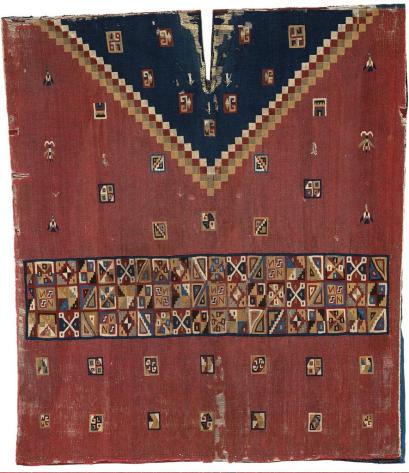
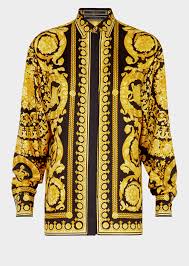
Luxuries are not a necessity, but something desired that in most cases few can afford. Being able to possess luxurious products is correlated with having a higher status in society. One example is in Inca society before the colonial era. The Sapa Inca rulers used fine cloth known as the mascapaycha to demonstrate dominance over the Andes. In Professor O’Toole’s lecture, she illustrated the meaning behind the Inca’s mascapaycha worn by the ruler and his wife. The Inca rulers wore these fine clothes to distinguish themselves from the Andes people and express their political power. The mascapaycha’s design symbolizes “how he [Inca ruler] controls all the regions, all the people”. The Inca became powerful and controlled the Andean people, the common people of the Andes. In addition, in possessing this decorative mascapaychas are similar to why people in this century continue to possess products from luxurious brands like Versace.

Products such as Versace and Louis Vuitton are brands that are highly purchased to present superiority. Being able to buy high-end brands shows the successfulness of the individuals, but also makes a social impression. Therefore, luxury has become a symbol that differentiates social classes. In addition, H. Sidgwick argues in his article, “Luxury”, that “luxury makes men lazy, disinclined for labor”(11). I agree to an extent where luxury is connected with labor and social status, but not necessarily “makes men lazy”. For instance, in having a professional degree there is an incline in having a higher status because of the higher wage. However, the unskilled workers have lower paying wage thus, they do cannot afford luxuries items and are inclined to the lower class. This can be compared to the Inca, for example, the professional degree workers are the royalty in the Inca Empire. They do not have to do physical labor, instead, their job is connected to an intellectual aspect. Furthermore, the unskilled laborers are the lower class in the Inca Empire where they do most of the physical labor. Thus, possessing luxury portrays a differentiation in social status.
In addition, luxury consumption has been important to having power, such as in politics. For instance, during Charles II reign, luxury consumption was important in a political aspect especially for the earl of Arlington, Henry Bennett. As a political figure, it was important for him to demonstrate his status and receive support. Furthermore, in having luxurious items, such as Henry Bennett, people can demonstrate their successfulness in their careers. Similarly, Helen Jacobsen argues that “a close analysis of Arlington’s cultural and material world evidences the way in which luxury consumption was of crucial importance to a career in political service at the Restoration court” (297). Arlington’s materialistic importance caused luxury consumption to be key in creating a political identity. Thus, luxury is correlated not only to demonstrate social status and successfulness but also power.
Sources:
Jacobsen, Helen. “Luxury Consumption, Cultural Politics, and the Career of the Earl of Arlington, 1660-1685.” The Historical Journal, vol. 52, no. 2, 2009, pp. 295–317. JSTOR, www.jstor.org/stable/40264172.
O’Toole, Rachel. “Machu Picchu (1400s Inca temple & fortress in today’s Peru).” Humanities Core Lecture. University of California Irvine, Irvine. 8 Jan. 2019.
Sidgwick, H. “Luxury.” International Journal of Ethics, vol. 5, no. 1, 1894, pp. 1–16. JSTOR, www.jstor.org/stable/2375503.
Images:
Man’s tunic (uncu) , back, Back. 1575-1600; Creation date: between 1575-1600. Artstor, library.artstor.org/asset/HUCB__1099_15615406
Versace. BAROCCO FW’91 PRINT SILK SHIRT. Versace. 14 Jan. 2019 <https://www.versace.com/us/en-us/women/clothing/blouses-tops/barocco-fw91-print-silk-shirt-a7008/A79398-A225583_A7008.html>.
Vuitton. Louis Vuitton. Wikimedia commons. 14 Jan. 2019 <https://commons.wikimedia.org/wiki/File:Louis_Vuitton_logo_and_wordmark.svg>.


