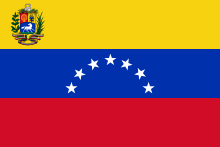
It seems that during the 21st century there would be an improvement in government by learning from history. However, to this day people are still fighting against tyranny. Perhaps this type of government is not called a “dictatorship” out loud but definitely has the characteristics. This is an example of Professor Lewis’ lecture on how language is powerful and can be used against an empire or this case the government. For instance, if people were aware of what issues a country faced because of tyranny, then they would use that injustice as a motivation to overthrow such a government.
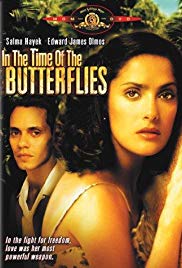
Throughout history resisting against this kind of ruling has been displayed. For instance, the film In the Time of the Butterflies, based on Julia Alvarez’s novel, illustrates how the Mirabal sisters fought against the Dominican Republic’s Trujillo regime. Rafael Trujillo did not tolerate free speech or freedom of the press. However, the Mirabal sisters became advocates to end his tyranny by rallying up people to join the movement against Trujillo. Trujillo used his power for his own profit and even took control of major industries and financial institutions. To make people aware of this and other crimes committed by Trujillo, the Mirabal sisters dispersed pamphlets containing the names of people who have been killed. The power of language here is that it provided the citizens of the Dominican Republic the knowledge they needed in order to realize the atrocity of Trujillo’s dictatorship and unite to be able to fight against it. Thus, providing information about Trujillo’s tyranny allowed an awakening of the country and be able to build upon these events to not allow another dictatorship to rise again.
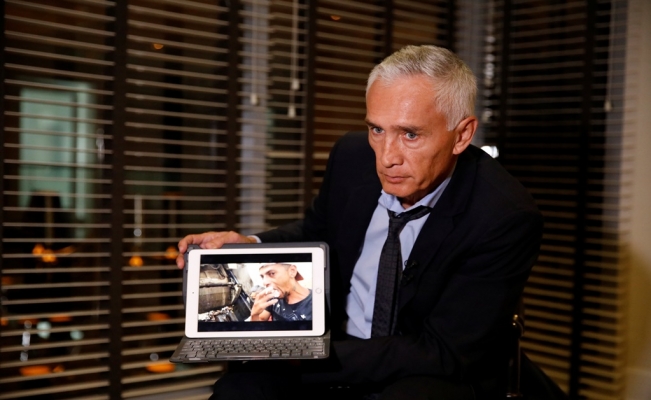
Similarly, Venezuelan President Nicolas Maduro is against the press because he fears the end of his tyranny. In a recent interview, a news anchor from the Univision network, Jorge Ramos illustrated his experience when confronting Maduro about the issue of human rights violation. He incarcerated Mr. Ramos after showing President Maduro a recording of “three young men looking for food on the back of a garbage truck in a poor neighborhood minutes away from the presidential palace”. President Maduro displayed fear that people would see how his tyranny is affecting the Venezuelans. His supremacy and lust for power have caused him to use violence and intimidation such as he displayed towards Jorge Ramos. With intimidation, he is able to demonstrate that defying him will have consequences causing people to submit to his ruling. He has held power for years and his regime has consisted of corruption and letting this out to the public will give an opportunity for other countries to convene and aid in overthrowing him.
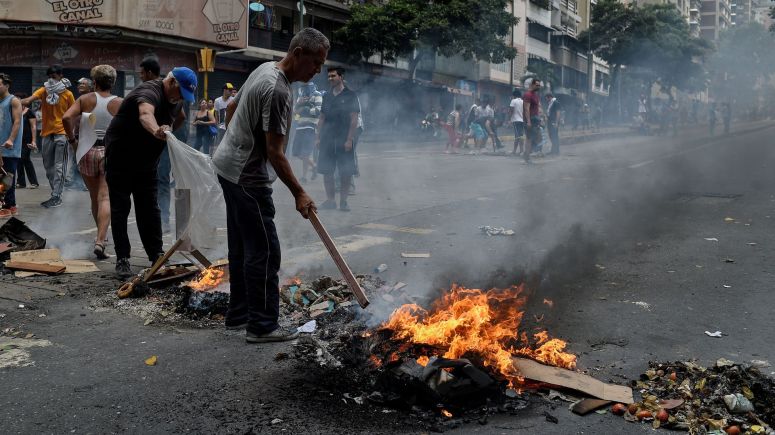
In societies like these both the oppressor and the oppressed live in fear. For instance, the oppressor lives in fear that the oppressed will rebel causing him to no longer be able to rule over the country. Nevertheless, the oppressed also live in fear that if they rebel they will be killed. However, the oppressed are the ones who suffer more physically and mentally in fighting for their cause. Furthermore, both dictators in these countries have prevented the press from attempting to stop the spread of the truth of their regime. The ambition of having political power creates a negative environment because of the “control” the dictator has on some of the citizens. Thus, this creates a hectic and divided country. Some support the dictator of the country while others are trying to remove him. Sometimes even families are split because of their different opinions making them “traitors”. Anti-supporters try to get people to be aware of the truth through the methods mentioned above, however, they also live in fear that they will get caught and killed. They have to risk their lives for a better future for their families. In today’s world language is important because it gives the power and knowledge of what goes on in the world. In these two forms of dictatorships, language has played a key role in the process of ending and confronting a cruel empire.
Works Cited.
BBC. “Venezuela’s Nicolás Maduro: Dictator or Defender of Socialism?” BBC News, BBC, 28 Jan. 2019, http://www.bbc.com/news/world-latin-america-20664349.
Biography.com Editors. “Rafael Trujillo.” Biography.com, A&E Networks Television, 31 Jan. 2019, http://www.biography.com/people/rafael-trujillo-39891.
Lewis, Jayne. “Language as a Partner/ Against Empire.” Humanities Core Lecture. Humanities Core Lecture, 7 Feb. 2019, Irvine, University of California Irvine .
Ramos, Jorge. “Jorge Ramos: The Dictator of Venezuela Earns His Title.” The New York Times, The New York Times, 27 Feb. 2019, http://www.nytimes.com/2019/02/27/opinion/jorge-ramos-venezuela.html.
Specia, Megan. “What Is Happening in Venezuela? How It Got Here and Why It Matters.” The New York Times, The New York Times, 24 Jan. 2019, http://www.nytimes.com/2019/01/24/world/americas/venezuela-news-protests-noticias-guaido-maduro.html.
 A Bridge Pathway