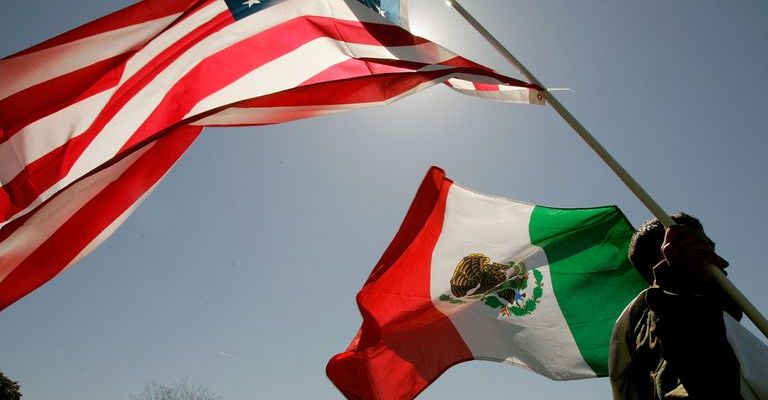
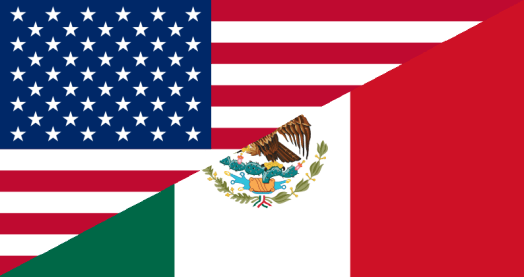
The process of identifying oneself is often difficult especially, for the second-generation Americans, who have grown up with different cultures simultaneously. An example is the generations of Mexican descent born in the U.S. Questions such as “Am I American because I was born and live in the U.S.? Am I Mexican since I have Mexican ancestry? Or am I a mixture of both, a Chicano?” arise.
Growing up in an American and Mexican culture makes it difficult to identify who they are, so Chicano is chosen because it includes both. This is often the one most identified because both cultures have been an important influence in creating the person they are today and also for their posterity. The continuation of celebrating both cultures allows the future generations learn to appreciate their ancestors and value being multicultural.
However, there are occasions where second-generation Americans identify with one culture because they do not assimilate with one as much as the other. Being inclined to an American culture is often criticized by family because they believe that they do not value their culture and will be lost for generations in the future. In addition to assimilating to the American culture, the stereotypes that arise are that “second-generations do not learn the Spanish language because English is spoken mostly in America.” Another belief is that not listening to or enjoying a certain type of genre that is part of the Mexican culture, is considered not being “Mexican enough”. Stereotypes and ideas like these are the cause for the disputes of identifying with cultures because just by not “satisfying” a part of the culture, it is considered not valuing it enough.
Nevertheless, Orientalism by Edward W. Said, argues that one viewpoint of a person is not the entire representation of a whole culture, “…exchange within a culture…is not ‘truth’ but representation” (Said 21). Said, describes how cultures are inaccurately presented because a culture is far beyond one idea. For example, the Mexican culture is not just language and music, but also the history, food, religion, and traditions. Even though people do not agree with one aspect of the culture, it does not disqualify them from being “Mexican”. Being part of the Mexican culture is more than just one part of the culture. Similarly, in the article “What’s in the ‘x’ of Latinx?” , Rigoberto Marquez examines how the term “Latinx” is used because the term “Latino/a” is perceived as not including everyone in the community. The term “Latinx”, however, creates a broader group that is not based on “…race, gender, sexuality…” and connects to identifying with one culture because just like “Latinx”, a culture should include everyone.
Despite the stereotypes and beliefs, second-generation Americans should identify themselves with the culture that they believe has influenced the person they have become. Future generations should not let stereotypes influence the perspective they have of their culture because the roots of each generation do not change, even if they identify with a different culture.
Works Cited:
Said, Edward W. Orientalism. W. Ross MacDonald School, Resource Services Library, 2006.
 A Bridge Pathway